Animal Science
Master the science of livestock production, animal nutrition, breeding, and welfare. Build a career in dairy, meat production, or animal health management.
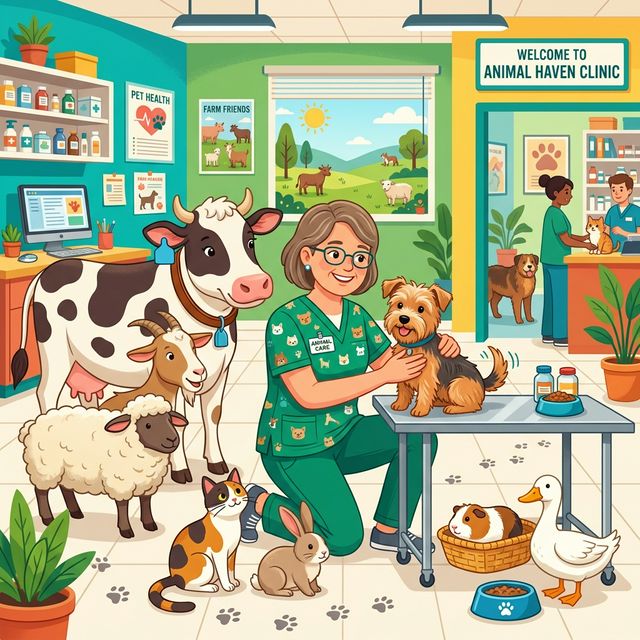
Career Overview
Understanding the fundamentals of Animal Science
Growing Demand
India's livestock sector is worth ₹12+ trillion; high demand for skilled professionals.
Career Growth
Multiple pathways from farm management to research and entrepreneurship.
Global Opportunities
Expertise in tropical livestock management is globally valued.
What is This Career All About?
Understanding animal science and livestock management.
Animal Science is the study of domesticated animals and their production, health, nutrition, and welfare.
It combines biology, chemistry, genetics, and management to optimize livestock productivity.
Professionals in this field work with cattle, buffalo, goats, sheep, poultry, and aquatic animals.
India has over 300 million livestock animals; skilled professionals are critical for food security.
Modern animal science uses precision farming, genetic selection, and sustainable practices.
Career opportunities span dairy, meat production, animal health, breeding, and research.
A Day in the Life: Priya, Livestock Manager at a Dairy Cooperative
Real workflow of an animal science professional.
Morning Health Check
Priya arrives at the dairy farm before sunrise. She conducts a health inspection of 200 dairy cattle, checking for signs of mastitis, lameness, or digestive issues. She uses a mobile app to record each animal's health status and milk production data.
Nutrition Planning
She reviews the feed composition with the farm manager. Based on milk yield data and body condition scores, she adjusts the diet for different groups of cattle. She ensures pregnant cows get extra minerals and lactating cows get optimal protein ratios.
Breeding Decisions
Priya analyzes genetic records and milk production data to identify which cows should be bred with which bulls. She uses AI-powered software to predict offspring traits and milk yield potential. She coordinates with the artificial insemination technician.
Quality Control
She collects milk samples and sends them to the lab for testing—fat content, protein, somatic cell count, and bacterial load. She ensures the farm meets international dairy standards.
Training & Documentation
She conducts a training session for farm workers on proper milking hygiene and animal handling. She updates the farm's digital records and prepares a weekly report on production metrics.
Problem-Solving
A cow shows signs of low milk production. Priya investigates—checking feed quality, water availability, and stress levels. She recommends dietary adjustments and veterinary consultation if needed.
Planning Tomorrow
Before leaving, Priya reviews tomorrow's schedule vaccinations, breeding cycles, and feed deliveries. She feels satisfied knowing her work ensures nutritious milk for thousands of families.
Is This You? Personality Traits & Skills
Self-assessment for the ideal candidate.
Animal Lover
You genuinely care about animal welfare and health.
Analytical Mind
You enjoy data analysis, genetics, and nutrition science.
Problem-Solver
You can troubleshoot health issues and production challenges.
Attention to Detail
You notice subtle changes in animal behavior or health.
Resilience
You're comfortable working in farms, handling animals, and working in all weather.
Communication Skills
You can explain complex concepts to farmers and farm workers.
Key Responsibilities & Workflow
The complete animal science professional cycle.
Animal Health Monitoring
Daily health checks, disease prevention, and veterinary coordination.
Nutrition Management
Formulating balanced diets based on animal requirements and available feed.
Breeding & Genetics
Selecting animals for breeding to improve productivity and health traits.
Production Optimization
Maximizing milk, meat, or egg production while maintaining animal welfare.
Record Keeping
Maintaining detailed records of health, production, breeding, and expenses.
Quality Control
Ensuring products meet food safety and quality standards.
Training & Supervision
Teaching farm workers proper animal handling and management practices.
Research & Innovation
Implementing new technologies and practices to improve efficiency.
Career Pathways in India
Educational journey from Class 10 onwards.
Pathway A
B.Sc Animal Science Route
Step 1
Complete Class 12th with PCB (Physics, Chemistry, Biology)
Step 2
Pursue B.Sc Animal Science (SAUs, ICAR institutes, private universities)
Step 3
Do internships at dairy farms, poultry units, or veterinary clinics
Step 4
Learn tools — livestock management software, genetic analysis, nutrition planning
Step 5
Pursue M.Sc or MBA in Animal Husbandry (optional)
Step 6
Join as Livestock Manager, Dairy Technician, or Animal Nutritionist
Pathway B
Diploma + Field Entry Route
Step 1
Complete Class 10th/12th with Science
Step 2
Pursue Diploma in Animal Husbandry (3 years, state agricultural institutes)
Step 3
Gain field experience — dairy farms, poultry units, breeding centers
Step 4
Learn practical skills — animal handling, health monitoring, record keeping
Step 5
Upgrade through lateral entry to B.Sc (optional)
Step 6
Work as Junior Livestock Officer, Farm Technician, or Dairy Supervisor
Pathway C
Veterinary Science Route
Step 1
Complete Class 12th with PCB
Step 2
Pursue B.V.Sc & A.H. (Bachelor of Veterinary Science & Animal Husbandry)
Step 3
Specialize in animal nutrition, reproduction, or production medicine
Step 4
Pursue M.V.Sc in specialized areas
Step 6
Work as Veterinarian, Animal Health Specialist, or Research Scientist
Market Snapshot — India 2026
Salaries, growth, and opportunities.
Salary Snapshot (Annual INR)
| Career Level | Est. Salary (p.a.) |
|---|---|
| CXO / Top Leadership (15+ yrs) | ₹30 LPA – ₹1+ Crore |
| Senior / Lead Role (10+ yrs) | ₹12–35 LPA |
| Mid-Level Professional (5–8 yrs) | ₹6–18 LPA |
| Junior / Associate (3–5 yrs) | ₹4–10 LPA |
| Entry Level (0–2 yrs) | ₹2–6 LPA |
Note
Dairy sector pays 20–40% higher
skills in precision livestock farming and genetics boost salary by 25–50%.
Where Are the Jobs?
Top cities and industries.
Top Cities
Pune, Hyderabad, Bengaluru, Delhi-NCR, Ludhiana, Indore, Jaipur
Top Industries
Dairy Cooperatives, Poultry Companies, Meat Processing, Livestock Research, Agri-Tech, Feed Manufacturing
Top Companies
Amul, Mother Dairy, ITC, Britannia, Suguna Poultry, Godrej Agrovet, Cargill
Government Sector
ICAR (Scientist), State Animal Husbandry Departments, NABARD
Global Demand
High in USA, Australia, Netherlands, Brazil; demand in tropical livestock management and dairy technology
What Will It Cost?
Course fees and additional expenses.
Government Institutions
₹40,000 – ₹2,00,000 (Total 4-year degree fees)
Private Institutions
₹3,00,000 – ₹10,00,000 (Total 4-year degree fees)
Duration
4 Years (B.Sc Animal Science)
Living/Hostel Costs
₹6,000 – ₹12,000 per month
Additional Costs
Practical training, field visits, certification exams (₹5k–₹15k)
Where to Study?
Top institutions across India.
Government
- •Indian Veterinary Research Institute (IVRI) Izatnagar
- •National Dairy Research Institute (NDRI) Karnal
- •Tamil Nadu Veterinary and Animal Sciences University
- •Anand Agricultural University
Private
- •Manipal Academy of Higher Education
- •Amity University
- •Lovely Professional University
- •Shoolini University
Online
- •IGNOU (Animal Husbandry Programs)
- •Swayam/NPTEL (Livestock Management Courses)
- •Coursera (Animal Science Courses)
Career Opportunities
Various career roles.
Conventional
Dairy Farm Manager, Poultry Production Manager, Livestock Officer, Animal Nutritionist, Veterinary Technician
New-Age & AI Driven
Precision Livestock Farming Specialist, Genetic Selection Analyst, Animal Health Data Scientist, Automated Milking System Technician
Entrepreneurship
Dairy Cooperative Founder, Poultry Farm Owner, Livestock Feed Manufacturer, Animal Health Product Developer
Realistic Challenges
The hard truths of the profession.
Disease Outbreaks
Sudden animal diseases can devastate entire herds and cause financial losses.
Market Volatility
Milk and meat prices fluctuate based on supply, demand, and global markets.
Labor Challenges
Finding skilled, reliable farm workers is increasingly difficult.
Weather Dependency
Extreme heat, cold, or drought affects animal health and productivity.
Regulatory Compliance
Navigating food safety, animal welfare, and environmental regulations.
Capital Investment
Setting up modern livestock facilities requires significant upfront investment.
Emotional Toll
Dealing with animal deaths and health crises can be emotionally challenging.
Long Working Hours
Livestock care requires early mornings, late nights, and weekend work.
Emerging Trends (2025–2035)
What's next in animal science.
Precision Livestock Farming
AI-powered monitoring of individual animal health and productivity.
Genetic Selection
Advanced genomics for disease-resistant and high-producing animals.
Sustainable Practices
Reducing methane emissions and improving feed efficiency.
Alternative Proteins
Lab-grown meat and plant-based alternatives changing the industry.
Automation
Robotic milking, automated feeding, and climate control systems.
Blockchain Traceability
Farm-to-consumer tracking for transparency and food safety.
Climate-Smart Livestock
Breeding animals adapted to changing climate conditions.
Integrated Farming
Combining livestock with crop production for sustainable systems.
Start Now (Class 9–12)
Beginning your animal science journey.
Visit Local Dairy Farms
Understand daily operations and animal care practices.
Learn Animal Nutrition
Study feed composition and dietary requirements.
Participate in Science Fairs
Create projects on animal health or breeding.
Follow Livestock News
Read about dairy industry trends and innovations.
Volunteer at Veterinary Clinics
Gain hands-on experience with animal care.
Learn Data Analysis
Excel skills for tracking animal production records.
Study Genetics
Understand heredity and selective breeding principles.
Inspiring Indian Personalities in Animal Science
Role models and industry leaders.
Dr. Verghese Kurien (NDDB Founder)
Revolutionized India's livestock sector and dairy farming through cooperative models.
Dr. M.S. Swaminathan (Agricultural Scientist)
Pioneer in animal genetics and sustainable livestock breeding.
Dr. Rajendra Singh (Animal Science Expert)
Leading researcher in livestock nutrition and production optimization.
Dr. Hari Bahadur (IVRI Director)
Pioneering research in tropical animal diseases and management.
Suresh Neotia (Venky's Founder)
Built India's largest poultry company with world-class animal science practices.
Dr. Anand Mahindra (Mahindra Group)
Invested in precision livestock farming and animal science technology.
Dr. Nita Ambani (Reliance Industries)
Championed sustainable and ethical animal science practices in India.
Learn More Through Videos
Watch expert insights and student experiences
Animal Science Career Overview - The Guardians of the Voiceless
Video 1 of 2