Apiculture
The science and business of keeping bees to produce honey and protect global pollination.
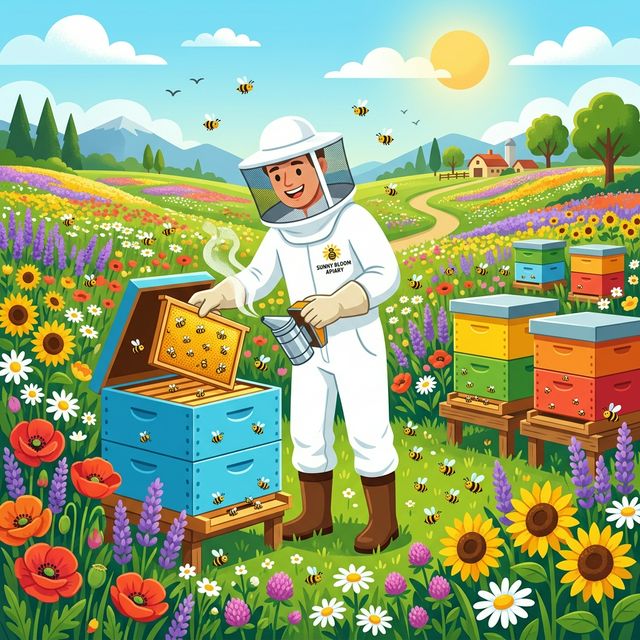
Career Overview
Understanding the fundamentals of Apiculture
Entrepreneurship
Start your own beekeeping business with low investment
Market Demand
India is 7th largest honey producer with growing demand
Global Opportunities
Export honey and bee products worldwide
What is Apiculture?
Bee management for honey and pollination
Apiculture is the science and business of keeping bees to produce honey and other bee products.
Beekeepers manage colonies, collect honey safely, and provide pollination services to farms.
Bees are critical for agriculture—they pollinate one-third of the food we eat globally.
India is the 7th largest honey producer in the world with enormous growth potential.
This career combines biology, business, and environmental conservation in one rewarding field.
A Day in the Life: Rajesh, Beekeeper & Honey Entrepreneur
Real workflow of a professional beekeeper.
Morning Inspection
Rajesh starts early at his apiary in Karnataka. He checks 20 bee boxes for colony health. He looks for the queen, brood patterns, and food stores. One hive shows signs of disease—he marks it for treatment.
Pollination Service
He drives to a nearby mango farm. During flowering season, he places 10 hives there. The farmer pays him ₹500 per hive for the season. The bees pollinate the flowers; the farmer gets better yields.
Honey Extraction
Back at the apiary, Rajesh extracts honey from 5 frames using a centrifuge. He filters it carefully and bottles it in 500ml jars. Each jar sells for ₹300–₹500 online.
Business & Marketing
Rajesh updates his Instagram with photos of his honey. He has 5,000 followers and gets 20 orders weekly. He also supplies to local restaurants and wellness shops.
Record Keeping
He maintains detailed records—hive health, honey yield, expenses, income. This data helps him plan for the next season and apply for government subsidies.
Learning & Networking
Rajesh attends a beekeeping workshop at the local KVK. He learns about new queen rearing techniques and connects with other beekeepers. Continuous learning is key to success.
Is This You? Personality Traits & Skills
Self-assessment for the ideal candidate.
Deep love for nature, biology, and outdoor work
Patient, calm, and ready to start your own business
Good at observation and problem-solving
Entrepreneurial mindset with business acumen
Okay with hands-on work and occasional bee stings
Willing to learn continuously and adapt to seasons
Key Responsibilities & Workflow
Hive health and honey harvesting
Hive Inspection
Checking colony health weekly for disease, pests, and food stores
Honey Harvest
Collecting honey 2–4 times yearly depending on season and flower availability
Pollination Services
Placing hives on farms during flowering season for pollination contracts
Disease Management
Treating diseases like Varroa mites and American Foulbrood
Queen Rearing
Breeding new queens to maintain healthy colonies
Product Sales
Bottling, branding, and selling honey, beeswax, royal jelly, and propolis
Record Keeping
Maintaining detailed logs of hive health, yield, and income
Career Pathways in India
Educational journey from Class 10 onwards.
Pathway A
B.Sc Agriculture + Specialization Route
Step 1
Complete Class 12th with PCB/PCM
Step 2
Pursue B.Sc Agriculture / B.Sc Zoology / B.Sc Entomology
Step 3
Take specialized training in Apiculture (CBRTI Pune, IARI, KVKs)
Step 4
Learn skills — bee colony management, honey extraction, queen rearing
Step 5
Pursue M.Sc Entomology / Apiculture for advanced knowledge
Step 6
Join as Apiculture Scientist, Bee Research Officer, or Honey Quality Analyst at ICAR, KVIC, or NBHM
Pathway B
Skill-Based / Entrepreneurship Route
Step 1
Complete Class 10th/12th (any stream)
Step 2
Attend beekeeping training at KVKs, NBHM, or state agriculture departments (free/subsidized)
Step 3
Learn basics — bee box setup, seasonal management, disease control
Step 4
Get FSSAI license and organic certification for honey products
Step 5
Apply for government subsidies — PMEGP, NABARD, NBHM schemes
Step 6
Start own beekeeping business — sell honey, beeswax, royal jelly, pollination services
Pathway C
Research + Government Route
Step 1
Complete Class 12th with PCB
Step 2
Pursue B.Sc Agriculture / Zoology from recognized university
Step 3
Clear ICAR-JRF and pursue M.Sc/Ph.D. in Entomology / Apiculture
Step 4
Publish research in bee biology, pollination science, or honey technology
Step 5
Clear ARS/NET or State PSC exams
Step 6
Join as Scientist at ICAR, University, or Government Research Institute
Market Snapshot — India 2025-26
Salaries, growth, and opportunities.
Salary Snapshot (Annual INR)
| Career Level | Est. Salary (p.a.) |
|---|---|
| Entrepreneur (Self-employed) | ₹3–50 LPA (based on hives and sales) |
| Apiculture Scientist (ICAR) | ₹8–25 LPA |
| Honey Quality Analyst | ₹5–15 LPA |
| Pollination Service Provider | ₹4–12 LPA |
Note
Entrepreneurs can earn ₹50,000–₹2 Lakhs monthly with 50–100 hives and good marketing
Market Growth
India's honey market growing at 8–10% CAGR; global demand for organic honey increasing
Government Support
PMEGP, NABARD, and NBHM provide subsidies and loans for beekeeping startups
Where Are the Jobs?
Top cities and industries.
Top Cities
Bengaluru, Pune, Hyderabad, Delhi-NCR, Lucknow, Indore
Top Industries
Honey production, Organic farming, Pollination services, Food processing, Wellness products
Government Sector
ICAR institutes, State Agriculture Departments, KVIC, NBHM
Private Sector
Honey brands (Dabur, Patanjali), Organic companies, Export firms
Entrepreneurship
Starting own beekeeping business with government support
Global Demand
High for organic and raw honey in USA, Europe, Middle East
What Will It Cost?
Education and starter kit costs.
Certificate Course
₹2,000 – ₹25,000 (3–6 months at KVKs or NBHM)
B.Sc Degree
₹15,000 – ₹1.5 Lakh yearly (Government colleges)
Starting Beekeeping Kit
₹25,000 – ₹60,000 (Bee boxes, smoker, suit, tools)
Initial Hives (10 boxes)
₹50,000 – ₹1 Lakh
FSSAI License
₹2,000 – ₹5,000
Hostel Living
₹5,000 – ₹8,000 monthly
Government Subsidies
Up to 50% cost covered by PMEGP, NABARD for startups
Where to Study?
Top institutions across India.
Government
- •Central Bee Research and Training Institute (CBRTI) Pune
- •Indian Agricultural Research Institute (IARI) New Delhi
- •National Bureau of Honey and Bee Research (NBHM) Shimla
- •State Agricultural Universities
Training Centers
- •Krishi Vigyan Kendras (KVKs) across India
- •State Agriculture Departments
- •KVIC training centers
Online
- •ICAR e-courses
- •Swayam/NPTEL
- •YouTube channels on beekeeping
Scholarship & Subsidy Opportunities
Financial assistance programs.
Government Subsidies
PMEGP (Prime Minister Employment Generation Programme) — up to 35% subsidy
NABARD Loans
Concessional loans for beekeeping startups
NBHM Support
Free training and equipment support from National Bureau of Honey and Bee Research
State Schemes
Various state agriculture departments offer subsidies for beekeeping
NSP Scholarships
For B.Sc students from economically weaker sections
Professional Bodies & Certifications
Credentials and regulatory requirements.
FSSAI License
Mandatory for honey production and sales
Organic Certification
For organic honey production (NPOP, IFOAM standards)
ISO 22000
Food Safety Management System certification
NBHM Certification
Recognition from National Bureau of Honey and Bee Research
State Beekeeping Board
Registration with state agriculture department
Career Opportunities
Conventional and emerging roles.
Conventional
Beekeeper & Honey Producer
Apiculture Scientist
Honey Quality Analyst
Pollination Service Provider
New-Age & Emerging
Organic Honey Entrepreneur
Bee Product Innovator (Royal Jelly, Propolis)
Agri-Tourism Beekeeper (Bee Farm Tours)
Pollination Data Analyst (AI-driven)
Remote/Entrepreneurship
Online Honey Brand Founder
Beekeeping Content Creator & Educator
Honey Export Consultant
Beekeeping Equipment Supplier
Challenges and Realities
The hard truths of the profession.
Seasonal Work
Income is seasonal; honey harvest depends on flower availability
Bee Stings
Occupational hazard; allergies can be serious
Disease Management
Varroa mites and other diseases can wipe out colonies
Weather Dependency
Droughts, floods, and pesticides affect bee populations
Market Competition
Honey market is competitive; quality and branding are crucial
Physical Demands
Long hours in sun, heavy lifting, and outdoor work
Regulatory Compliance
FSSAI and organic certifications require strict adherence
Emerging Trends & Future Outlook (2025–2035)
What's next in apiculture.
Organic & Raw Honey
Growing global demand for unprocessed, organic honey
Bee Product Diversification
Royal jelly, propolis, and bee venom gaining popularity
Agri-Tourism
Bee farm tours and honey experiences becoming popular
Technology Integration
IoT sensors for hive monitoring, AI for disease detection
Climate-Resilient Bees
Research into bee varieties adapted to climate change
Pollination as a Service
Formal contracts between beekeepers and farmers increasing
Skills to Build While Still in School
Actionable steps to start your journey.
Biology & Entomology
Focus on insect biology and ecology
Business Basics
Learn marketing, accounting, and entrepreneurship
Observation Skills
Start observing insects and nature closely
Online Learning
Watch YouTube channels on beekeeping and honey production
Networking
Connect with local beekeepers and farmers
Internship
Volunteer at a local apiary or farm during summers
Famous Indian Personalities in Apiculture
Inspiring figures in the industry.
Dr. P.K. Sharma
Pioneer of modern beekeeping in India; founder of CBRTI Pune
Rajesh Masrani
Successful honey entrepreneur with 500+ hives; exports organic honey globally
Dr. Ashok Sharma
Leading researcher in bee genetics and pollination science at IARI
Neha Sharma
Young beekeeper and agri-entrepreneur; runs successful honey brand on social media
Vikram Singh
Pollination service provider; works with farmers across Punjab and Haryana
Learn More Through Videos
Watch expert insights and student experiences
Apiculture Career Overview - The Science of Bees
Video 1 of 1